
Views: 15 Author: Site Editor Publish Time: 2025-12-11 Origin: Site
Choosing the right plastic material is a critical step in hair comb manufacturing, directly influencing product durability, flexibility, appearance, and long-term performance. For global buyers, retailers, and private-label brands, material selection also affects cost control, freight efficiency, and customer satisfaction. ABS, PP, and PS remain the three most commonly used plastics in the comb industry due to their stable molding performance and predictable supply-chain availability.
In practical OEM/ODM projects, manufacturers such as Vickkybeauty often evaluate material options based on comb type, target market positioning, surface finishing needs, and budget constraints. Understanding the differences between these plastics helps ensure that your final product aligns with both functional requirements and commercial goals.

Understanding the characteristics of ABS, PP, and PS is essential when selecting materials for hair comb manufacturing. Each plastic behaves differently in terms of durability, surface finish, molding stability, and cost efficiency. For brands, wholesalers, and private-label buyers, material choice determines not only the product’s final quality but also its target market positioning. Manufacturers such as Vickkybeauty evaluate these materials based on project requirements, ensuring that combs meet performance expectations while aligning with desired price points.
ABS (Acrylonitrile Butadiene Styrene) is a robust thermoplastic known for its excellent impact strength and dimensional stability, making it ideal for mid-range and premium hair combs. Its density of around 1.03–1.06 g/cm³ provides a solid, high-quality feel that resonates with professional salon tools and consumer retail products. ABS supports various finishing processes—including spray painting, electroplating, silk printing, and heat-transfer printing—which allows brands to create more stylish, glossy, or metallic designs. This material maintains reliable performance under moderate heat and is widely chosen for precise-tooth styling combs requiring strong rigidity.

PP (Polypropylene) is highly valued for its lightweight structure, very strong bending resistance, and excellent fatigue performance. With a density between 0.90–0.92 g/cm³, PP produces extremely light combs that appeal to everyday consumers and are comfortable for long-term use. The material’s natural flexibility allows comb teeth to bend without breaking, making PP an excellent option for detangling combs, shower combs, and wide-tooth designs. Its resistance to moisture, chemicals, and heat deformation also makes it suitable for humid bathroom environments or travel products requiring durability at a lower cost.

PS (Polystyrene) is a low-cost, rigid plastic primarily chosen for economical combs or disposable-use applications. While its density (1.04–1.06 g/cm³) is similar to ABS, PS lacks impact strength and tends to crack or snap when exposed to pressure. Manufacturers use PS when cost-per-unit control is a priority, such as hotel amenity kits, promotional giveaway combs, and mass-market packaging inserts. Although PS molds cleanly and maintains consistent shape, its brittleness limits its use in demanding consumer applications. It is best suited for simple designs that do not require long-term durability.

Different plastics perform differently under stress, heat, and daily usage conditions. For buyers sourcing hair combs in large volumes, understanding these performance variations reduces product failure rates and helps with selecting the most suitable material for different market tiers. This section offers a structured comparison across durability, flexibility, heat resistance, appearance, cost, and environmental considerations. Manufacturers such as Vickkybeauty typically use these criteria to recommend materials based on comb design, expected retail positioning, and surface finishing needs.
Durability determines how well a comb withstands bending, pressure, and repeated usage. ABS delivers excellent strength and is often chosen for professional styling combs that must resist impact. PP performs well in flexibility-driven scenarios, bending significantly without breaking. PS, while mold-friendly, ranks low in mechanical strength and is unsuitable for long-term use.
Durability Comparison Table
Property | ABS (High-End) | PP (Flexible Use) | PS (Economical) |
Impact Resistance | Excellent | Good | Poor |
Breakage Risk | Low | Very Low | High |
Bending Tolerance | Medium | Excellent | Low |
The data shows that PP is the best option where flexibility matters, while ABS is superior for combs requiring structural rigidity.
User comfort is heavily influenced by the material’s ability to bend without causing scalp discomfort. PP leads in this category due to its natural elasticity, allowing detangling combs to glide through hair without grabbing. ABS offers moderate flexibility, providing a controlled styling experience ideal for salons. PS, being brittle, does not offer meaningful flexibility, which limits its comfort during usage.
Key Points
PP: bends over 20–25% before deformation.
ABS: maintains shape but allows slight functional flex.
PS: <5% flex before cracking.
These differences directly influence your product’s comfort rating in consumer markets.

Heat performance is important for salons and high-humidity environments. ABS withstands moderate heat exposure, making it suitable for sectioning combs used during blow-drying or coloring. PP resists moisture, chemicals, and heat deformation, performing reliably in bathrooms, spas, and travel scenarios. PS shows poor heat tolerance and may warp or crack under elevated temperatures.
Typical Heat Resistance Range
ABS: up to 80–90°C
PP: up to 90–100°C
PS: below 70°C
As such, PP and ABS remain safe choices for hair-care environments involving warm water or heat styling tools.
ABS supports the widest range of surface treatments, allowing brands to create glossy, matte, metallic, or printed combs. It is the preferred material for custom branding, premium looks, and retail packaging visibility. PP has limited adhesion properties, making printing more challenging unless surface-treated first. PS molds into clear or shiny surfaces but lacks premium feel.
Finishing Compatibility Score (1–5 scale)
ABS: 5
PP: 3 (requires treatment)
PS: 2
This makes ABS the leading option for brand-driven aesthetic customization.
Material cost significantly impacts large-scale procurement. PP and PS are widely considered cost-effective, especially for mass-market or disposable combs. ABS, while slightly more expensive, offsets cost with better performance, finishing flexibility, and break resistance.
Relative Cost Index (ABS = 100)
ABS: 100
PP: 80–90
PS: 60–70
For buyers targeting competitive price points, PP delivers strong value without sacrificing usability.

PP and ABS are recyclable, though PP is more commonly accepted in mainstream recycling streams. PS recycling is limited due to the material’s brittleness and low reuse value. For buyers exploring sustainable options, manufacturers like Vickkybeauty can supply PCR materials, bio-based plastic options, and recyclable packaging formats.
Recyclability Rating
PP: High
ABS: Medium
PS: Low
Buyers seeking eco-aligned marketing claims typically prefer PP or ABS.
Different comb designs function in different environments, meaning no single plastic material is ideal for every product category. Retailers, distributors, and private-label brands often need a structured material-selection framework to ensure that each comb model meets the end user’s expectations for durability, flexibility, and visual appeal. Manufacturers such as Vickkybeauty typically assess several factors—including tooth spacing, thickness, intended user group, environment of use, and required finishing—before recommending a material choice for OEM/ODM projects.
Detangling combs require significant flexibility to prevent tugging and reduce hair breakage. PP stands out due to its ability to bend under pressure while maintaining its shape, making it comfortable for both wet and dry detangling. The material’s low density also contributes to lightweight comb bodies, which are easier to maneuver. ABS can be used for premium detangling designs but will not match PP’s elasticity. PS should be avoided because it snaps easily under detangling force.
Recommended Material: PP
Secondary Option: ABS (for higher-end markets)
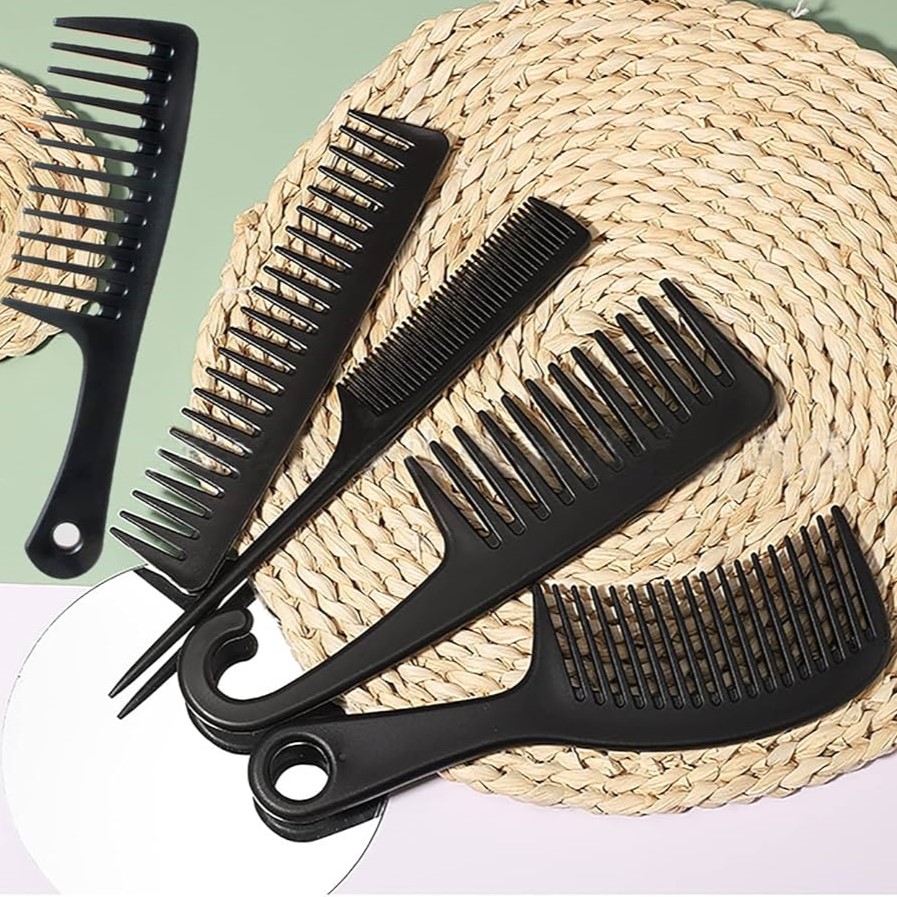
Salon combs must maintain rigidity, precision tooth alignment, and heat stability during cutting, coloring, and blow-drying. ABS is the superior option due to its strong structural integrity, consistent molding accuracy, and compatibility with matte or glossy surface treatments. Its moderate heat resistance ensures the comb remains stable near heated styling tools. PP is sometimes used for wide-tooth salon combs, but lacks the stiffness needed for sectioning. PS is unsuitable for professional environments.
Recommended Material: ABS
Optional: PP (wide-tooth only)

Pocket combs, hotel amenities, and promotional giveaways prioritize cost efficiency and compact design. PS is commonly selected due to its low price point and ease of molding into thin bodies. Although brittle, PS remains adequate for occasional or short-term use. Buyers targeting low-budget markets often view PS combs as disposable accessories. PP may be used for slightly higher-quality promotions, while ABS is rarely selected unless the giveaway is positioned as premium.
Recommended Material: PS
Higher-End Alternative: PP

Shower combs must perform well in humid environments and handle detangling on wet hair, making PP the clear leader. PP resists moisture absorption, maintains excellent elasticity, and remains stable in warm water environments. Wide-tooth designs benefit significantly from PP’s bending characteristics, which prevent breakage during heavy detangling. ABS is also suitable for shower combs but is heavier and less flexible. PS is not recommended for moisture-rich environments.
Recommended Material: PP
Secondary Option: ABS (premium finish)
High-end combs, metal-effect combs, and plated or printed designs rely heavily on surface-finishing compatibility. ABS supports spray painting, electroplating, water-transfer printing, and heat-transfer printing, offering brands significant freedom in achieving glossy, metallic, or decorative looks. Its dimensional stability ensures that finishing layers adhere evenly. PP is difficult to plate without pre-treatment and generally used only for matte or basic designs. PS supports basic glossy surfaces but cannot meet luxury expectations due to low durability.
Recommended Material: ABS
Finishing Advantage: Excellent for plating and printing

Material selection does not only influence product performance; it also affects the manufacturing workflow, mold design, cycle time, finishing processes, and overall production cost. For OEM/ODM buyers, these manufacturing implications determine both project feasibility and delivery timelines. Understanding how ABS, PP, and PS behave during injection molding helps optimize product design early and prevents delays caused by warping, shrinkage, or finishing failure. Manufacturers like Vickkybeauty typically evaluate these factors when advising clients on material choice for custom comb projects.
Different plastics display different flow characteristics and shrinkage rates during injection molding. ABS requires higher injection pressure and benefits from molds with reinforced gates to ensure smooth flow across multiple thin-tooth sections. PP has excellent mold flow and lower density, reducing the need for overly complex cooling channels. PS molds easily and fills quickly, but its brittle nature requires careful control of gate placement to avoid stress concentration points.
Typical Material Shrinkage Rates
ABS: 0.4–0.7%
PP: 1.0–2.5%
PS: 0.3–0.6%
These differences influence mold size, cavity alignment accuracy, and tooling cost.

Cycle time directly impacts production cost. PP typically allows the fastest cycle times because of its efficient cooling behavior, making it ideal for high-volume, cost-sensitive orders. ABS requires moderate cooling time due to its density and heat absorption properties. PS cools quickly as well, but its breakage risks may increase QC rejection rates. Manufacturing facilities like Vickkybeauty factor cycle time, machine load, and mold cavity count when planning mass production.
Estimated Cycle Time Index (Lower = Faster)
PP: 1.0
PS: 1.1
ABS: 1.3
PP clearly delivers the best efficiency for large-volume procurement.
Surface finishing dramatically affects visual appeal and brand differentiation. ABS supports nearly all finishing techniques due to its balanced rigidity and excellent surface adhesion. PP requires flame treatment or corona treatment before printing or painting, which adds cost and time. PS can be printed easily but cannot withstand plating or high-stress decorative processes due to its brittleness.
Finishing Compatibility Overview
Technique | ABS | PP | PS |
Spray Painting | Excellent | Poor | Fair |
Electroplating | Excellent | Not Suitable | Not Suitable |
Heat-Transfer Printing | Excellent | Moderate (pre-treatment) | Fair |
Silk Screen Printing | Excellent | Moderate | Good |
ABS is the preferred material for combs requiring strong brand identity and polished aesthetics.
Selecting the best plastic for your hair comb project requires balancing performance, cost, surface finishing, durability expectations, and target user groups. For B2B buyers, this decision directly affects product value perception, return rates, and overall profitability. Because each material—ABS, PP, and PS—serves different use cases, applying a structured decision framework ensures consistency across multiple SKUs or product lines. Manufacturers such as Vickkybeauty often provide material recommendations after reviewing your product drawings, market positioning goals, and expected annual order quantity.
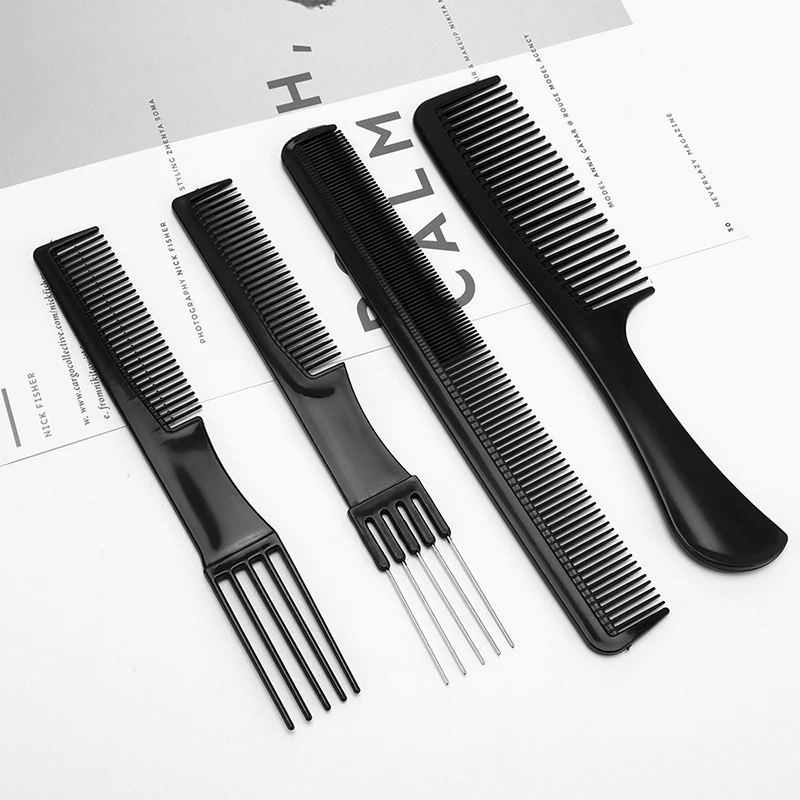
Budget is often the first determining factor, especially for high-volume distributors and FMCG retail chains. PS offers the lowest material cost, making it suitable for disposable or giveaway combs in price-sensitive markets. PP provides a balance between affordability and performance, especially for everyday consumer combs and shower-use products. ABS, while more expensive, supplies superior finishing possibilities and durability, making it ideal for mid-to-high-end retail shelves.
Quick Budget Guide
PS: For ultra-low-cost mass programs
PP: For value-priced retail lines
ABS: For premium or branded collections requiring better aesthetics
Brand positioning determines how your comb should “feel” and perform in a customer’s hand. Retailers targeting beauty shops, salons, and department stores typically choose ABS for its weight, rigidity, and compatibility with high-end finishes. Brands selling to supermarkets or drugstores often select PP for practicality and comfort. Hotel chains or travel kit suppliers usually work with PS due to cost constraints.
Market Strategy Matrix
High-End: ABS
Mass Market: PP
Economy/Disposable: PS
If your comb requires metallic effects, glossy coatings, gradients, printed logos, or premium aesthetics, ABS is the most capable material. PP only supports these finishing methods after surface treatment, which increases cost and production time. PS offers clean molding but lacks compatibility with premium decorative processes. When Vickkybeauty assesses finishing needs for a client, ABS is recommended for 90% of designs requiring plating, spray painting, or complex artwork.
Finishing Demand Logic
Complex visuals → ABS
Simple colors → PP
Basic clear/shiny → PS

Usage environment strongly affects material selection. For wet-use, detangling, and daily consumer applications, PP is the most practical choice. For salon environments involving heat, chemicals, and precision cutting, ABS offers the required rigidity and stability. For occasional or single-use situations—such as hotel amenities—PS meets the functional requirement at minimal cost.
Scenario-Material Fit
Shower/Detangling → PP
Salon/Professional Tools → ABS
Travel/Giveaways → PS
Ready to elevate your hair comb offerings with high-quality, customizable solutions? Vickkybeauty provides a seamless, one-stop OEM/ODM service tailored to your exact specifications. Whether you require PP, ABS, PS, or PE materials, fast sampling, or bulk production with flexible packaging and international shipping, we have you covered. Join numerous global retailers and brands who trust Vickkybeauty for reliable, innovative, and compliant products. Contact us today to discuss your project requirements and discover how our expertise can help you achieve superior results and faster market delivery.
In conclusion, choosing the right supplier for plastic hair combs is critical for ensuring product quality, timely delivery, and overall business success. Vickkybeauty combines over 18 years of injection molding expertise with a robust production capacity of 2 million units per year, certified under BSCI standards. With a wide selection of materials including PP, PS, PE, and ABS, alongside customized OEM/ODM solutions, Vickkybeauty offers a reliable, one-stop service for global brands. From rapid 7-day sample turnaround to flexible packaging and logistics options, our comprehensive approach ensures that every order meets the highest standards, minimizing risk and maximizing efficiency for your business. Partnering with Vickkybeauty guarantees consistency, innovation, and peace of mind in every project.